 Atlas Winston


Notification about latest news from us.

 Published: Thursday, July 30
Updated: Thursday, July 30
Published: Thursday, July 30
Updated: Thursday, July 30
 1 month ago

Credited from: REUTERS
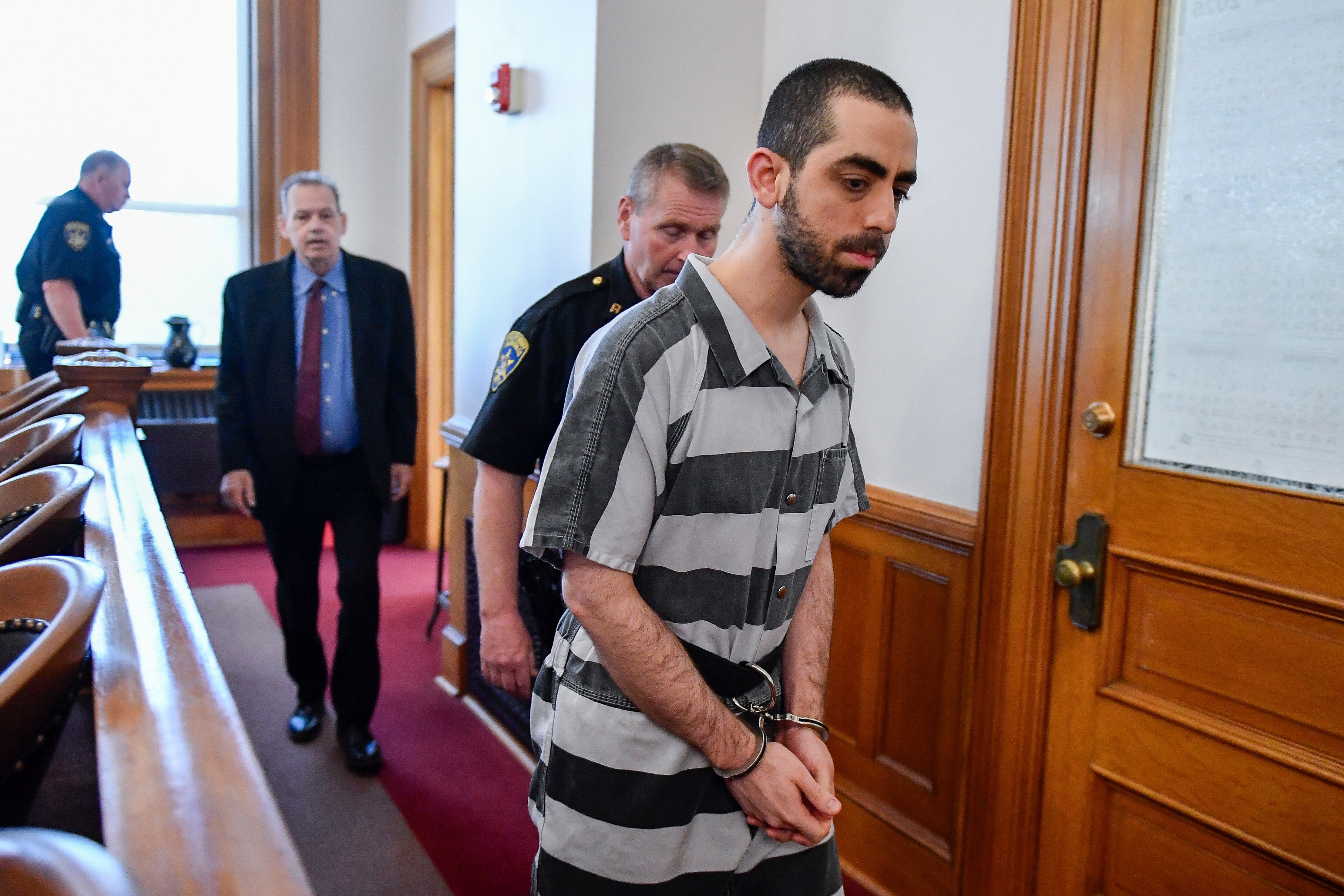
Hadi Matar, the man responsible for the 2022 stabbing of Salman Rushdie, was convicted in federal court on July 29 of multiple terrorism charges, including engaging in an act of transnational terrorism. The jury concluded its deliberations in just two hours, finding Matar guilty of attempting to provide material support to Hezbollah, the Iran-backed militant group. Matar, already serving a 25-year prison sentence for attempted murder from a New York state court, now faces a federal sentence that could lead to life in prison, according to CBS News, BBC, and Reuters.
During the trial, Rushdie testified about the horrific attack that occurred as he prepared to speak at the Chautauqua Institution. He was stabbed 15 times, sustaining severe injuries that resulted in partial blindness in his right eye. Matar's actions were guided by a 1989 fatwa issued by Iran's Ayatollah Ruhollah Khomeini, which called for Rushdie's death due to perceived blasphemy in his novel "The Satanic Verses." Matar's personal motivations included assertions made by supporters like Hassan Nasrallah, the late leader of Hezbollah, who had previously reinforced the call for violence against Rushdie, as reported by Los Angeles Times and India Times.
Prosecutors presented evidence that Matar had spent months preparing for the attack, including researching Rushdie's whereabouts and engaging in conversations over messaging apps where he expressed his motivations and intentions surrounding the fatwa. Matar ultimately attempted to fulfill this edict, believing that Rushdie had insulted Islam and that his survival emboldened further disrespect toward the faith. The jury found Matar's actions to be a chilling reflection of Iranian terrorism's broader implications, as highlighted by U.S. Attorney Michael DiGiacomo's statements, according to Le Monde and NPR.
Rushdie had long faced threats due to his literary works, experiencing nearly a decade in hiding following the fatwa before gradually resuming a public life. Despite his years of seclusion, the fatwa was never formally rescinded. The attacks on Rushdie and similar incidents reflect ongoing tensions surrounding freedom of expression, particularly in the context of literature discussing sensitive religious themes, as emphasized by multiple reports including CBS News, BBC, and Reuters.


 September 08, 2026
 September 09, 2026
 September 09, 2026

Stay informed effortlessly with PRESS AI WORLD, the AI-powered news summarizer that delivers concise, easy-to-read global headlines tailored to your interests.

 CBSNEWS
  BBC
BBC  REUTERS
  LATIMES
  LEMONDE
  INDIATIMES
  NPR
NPR 


