
 Atlas Winston


Notification about latest news from us.

 Published: Monday, January 19
Updated: Tuesday, January 20
Published: Monday, January 19
Updated: Tuesday, January 20
 7 months ago

Credited from: BBC
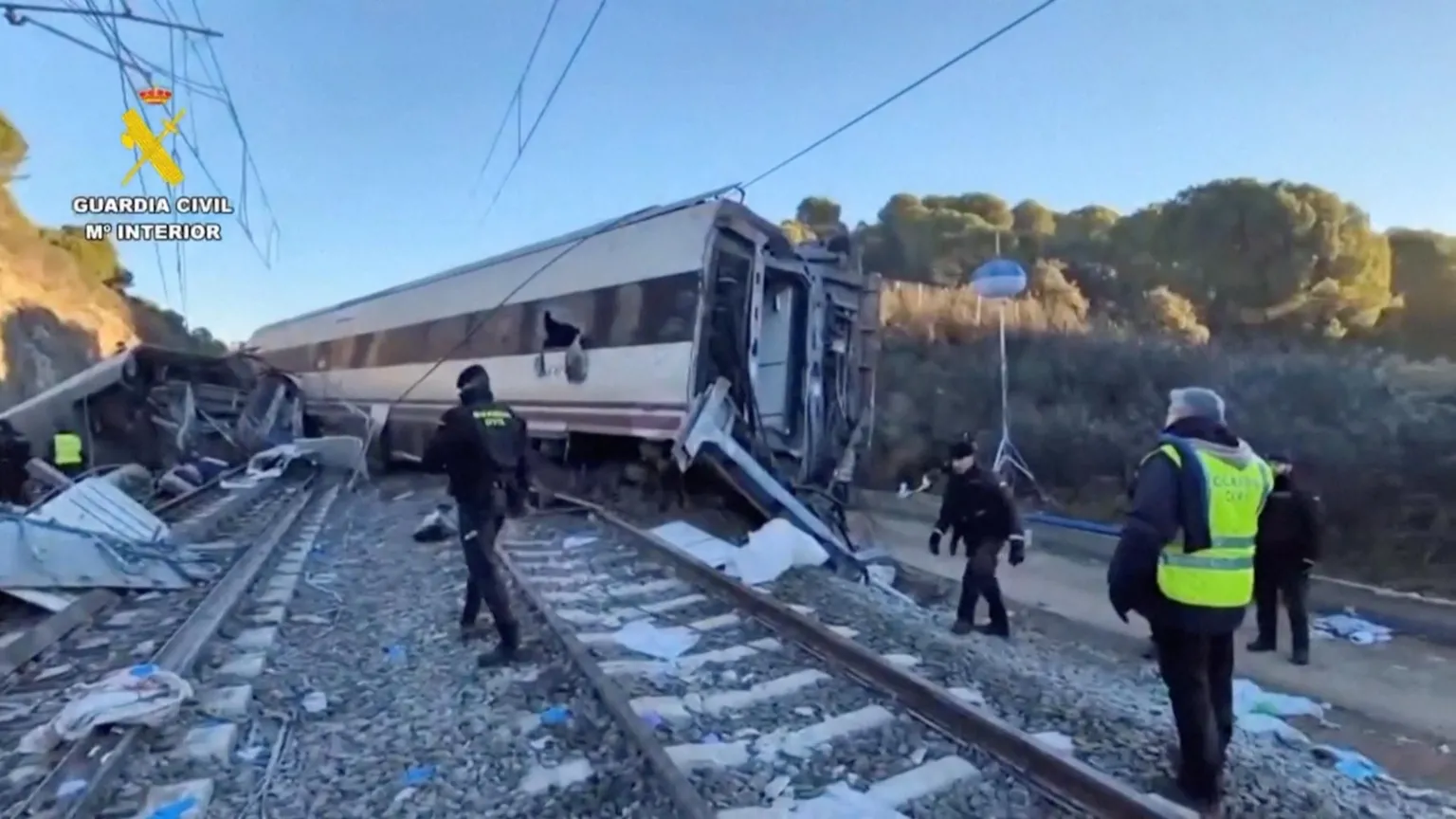
The tragic train collision in southern Spain on Sunday evening resulted in at least 40 confirmed fatalities, with more than 120 others injured, according to officials. The incident occurred when a high-speed train from Malaga to Madrid derailed near Adamuz and collided with an oncoming train heading from Madrid to Huelva, leading to immediate rescue operations at the scene, where many survivors reported feeling the impact akin to an "earthquake," according to SCMP, Los Angeles Times, and India Times.
Spain’s Transport Minister, Óscar Puente, described the accident as "extremely strange" since it occurred on a straight section of the newly renovated track. Investigations are ongoing, with initial reports suggesting a potentially faulty rail joint indicated as a key factor in the derailment. Technicians found signs of wear leading to a separation between rail sections, compounding the difficulties for emergency responders, as explained by sources quoted in Reuters and BBC.
Onboard the Iryo train, passengers experienced pandemonium as the train collided with the approaching Renfe service. Eyewitness accounts indicated chaos as individuals attempted to escape through shattered windows, as described by eyewitness Salvador Jimenez, who noted that emergency measures were taken to evacuate the injured. He reported that many passengers sustained injuries from broken glass as they managed to flee, as stated by Channel News Asia and India Times.
The accident marked the deadliest rail disaster in Spain since 2013, highlighting vulnerabilities within Spain's extensive high-speed rail system, which is considered one of the most advanced in Europe. Current measures include the inter-agency investigation that aims to clarify the exact circumstances behind the crash. Spanish officials have indicated that arriving at conclusions may take several weeks, potentially affecting all rail traffic in and out of southern cities for the immediate future, according to reports from Anadolu Agency and BBC.


 January 18, 2026
Syria and Kurdish-led SDF Reach Ceasefire and Integration Agreement
January 19, 2026
Boy, 12, in critical condition after shark attack in Sydney Harbour
January 18, 2026
Syria and Kurdish-led SDF Reach Ceasefire and Integration Agreement
January 19, 2026
Boy, 12, in critical condition after shark attack in Sydney Harbour


 September 02, 2026
 August 30, 2026
 August 31, 2026
Stay informed effortlessly with PRESS AI WORLD, the AI-powered news summarizer that delivers concise, easy-to-read global headlines tailored to your interests.
 SCMP
SCMP  CHANNELNEWSASIA
  INDIATIMES
  AA
AA  BBC
BBC  REUTERS
  THELOCAL
  LATIMES


