 Gloria Terra


Notification about latest news from us.

 Published: Wednesday, September 02
Updated: Thursday, September 03
Published: Wednesday, September 02
Updated: Thursday, September 03
 1 month ago

Credited from: NPR
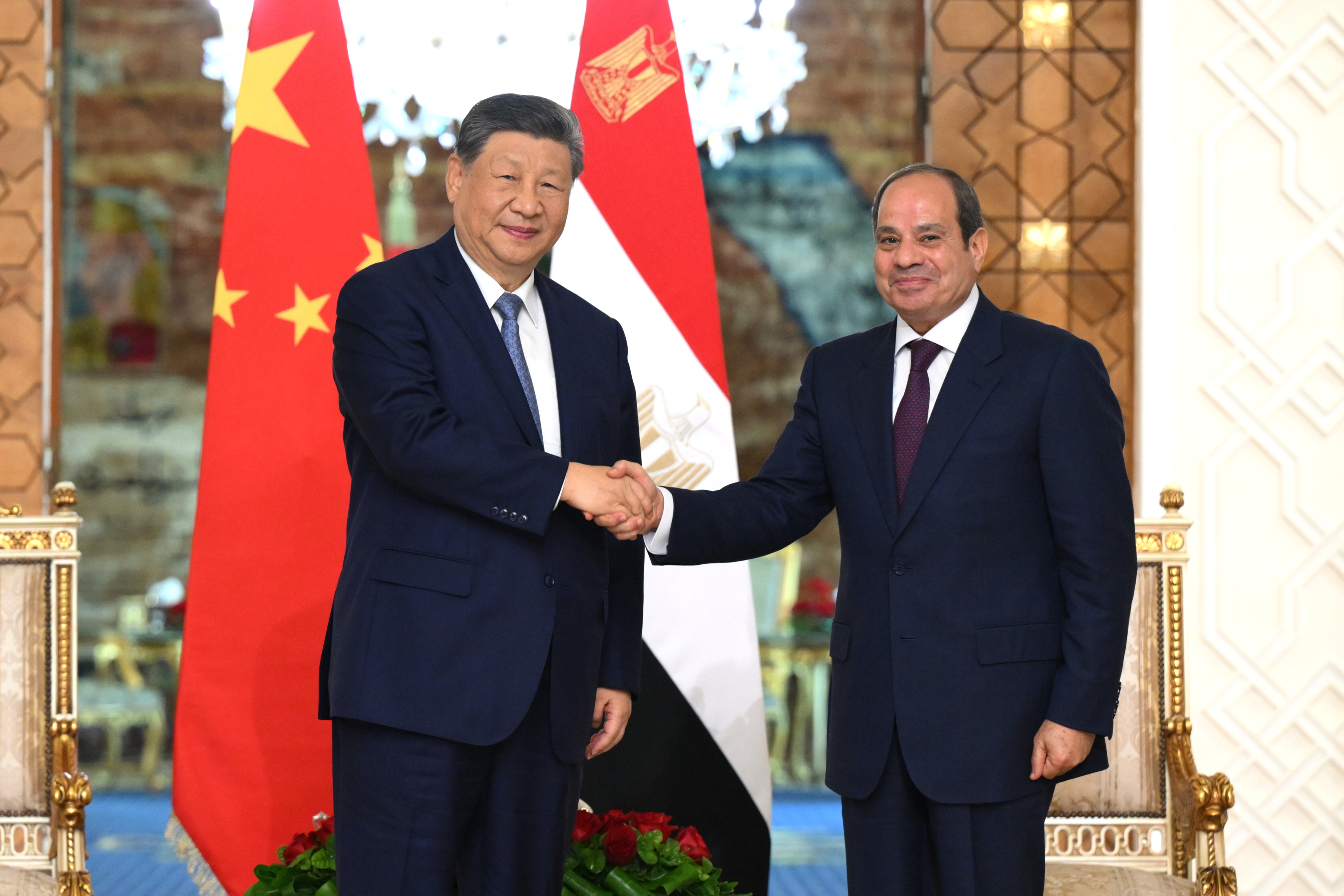
Chinese President Xi Jinping's visit to Egypt marks his first trip in a decade and reflects a substantial effort to deepen economic and diplomatic relations, especially as regional tensions rise with the ongoing U.S.-Israel conflict involving Iran. Xi’s visit aims to position China as a stabilizer contrasted against the long-term military presence of the U.S. in the region. He emphasized cooperation for a "more just and equitable global governance system" in his meetings with Egyptian President Abdel Fattah el-Sissi, indicating a clear intent to foster a multipolar world order, according to latimes and NPR.
The leaders held discussions that encompassed calls for regional cooperation to address security matters and ensure the safety of vital trade routes. Xi urged Middle Eastern countries to resist external intervention, stressing that regional powers should govern their own security affairs. Both leaders underscored the importance of diplomatic solutions to the U.S.-Israel war and outlined plans to expand China's footprint in Egypt through significant investment and infrastructure projects, according to Al Jazeera.
During Xi's visit, the two nations celebrated 70 years of diplomatic relations, with el-Sissi praising China's investments, which have exceeded $10 billion, particularly in the Suez Canal region—essential since the Strait of Hormuz faces disruptions. This moment also comes as Egypt has sought to diversify its international partnerships, avoiding over-reliance on the U.S. while enhancing its strategic autonomy, reports Al Jazeera and NPR.
Both nations are poised to sign various economic agreements focusing on sectors like artificial intelligence, manufacturing, and transport. Additionally, military cooperation is on the rise, highlighted by recent joint air exercises involving Chinese and Egyptian fighter jets. These developments underscore a converging interest in enhancing defense capabilities amidst a volatile regional landscape, according to latimes and Al Jazeera.
Xi's trip is significant in the context of China’s broader strategy to establish itself as a preeminent player in the Middle East, especially as U.S. involvement comes under scrutiny amid ongoing conflicts. The U.S. has historically provided substantial military aid to Egypt, emphasizing the intricate balancing act Cairo must perform in maintaining ties with both powers. Experts suggest that el-Sissi’s approach reflects a strategy to promote national interests while hedging against uncertainties in U.S. foreign policy, according to Al Jazeera, latimes, and NPR.


 September 02, 2026
Chevron to invest $7 billion to double oil production in Venezuela
September 02, 2026
Iranian Attack on Saudi Tanker Sidr Results in Fatalities
September 02, 2026
Chevron to invest $7 billion to double oil production in Venezuela
September 02, 2026
Iranian Attack on Saudi Tanker Sidr Results in Fatalities


 October 13, 2026


Stay informed effortlessly with PRESS AI WORLD, the AI-powered news summarizer that delivers concise, easy-to-read global headlines tailored to your interests.

 LATIMES
  ALJAZEERA
  NPR
NPR 


