
 Gloria Terra


Notification about latest news from us.

 Published: Friday, May 22
Updated: Saturday, May 23
Published: Friday, May 22
Updated: Saturday, May 23
 4 months ago

Credited from: REUTERS
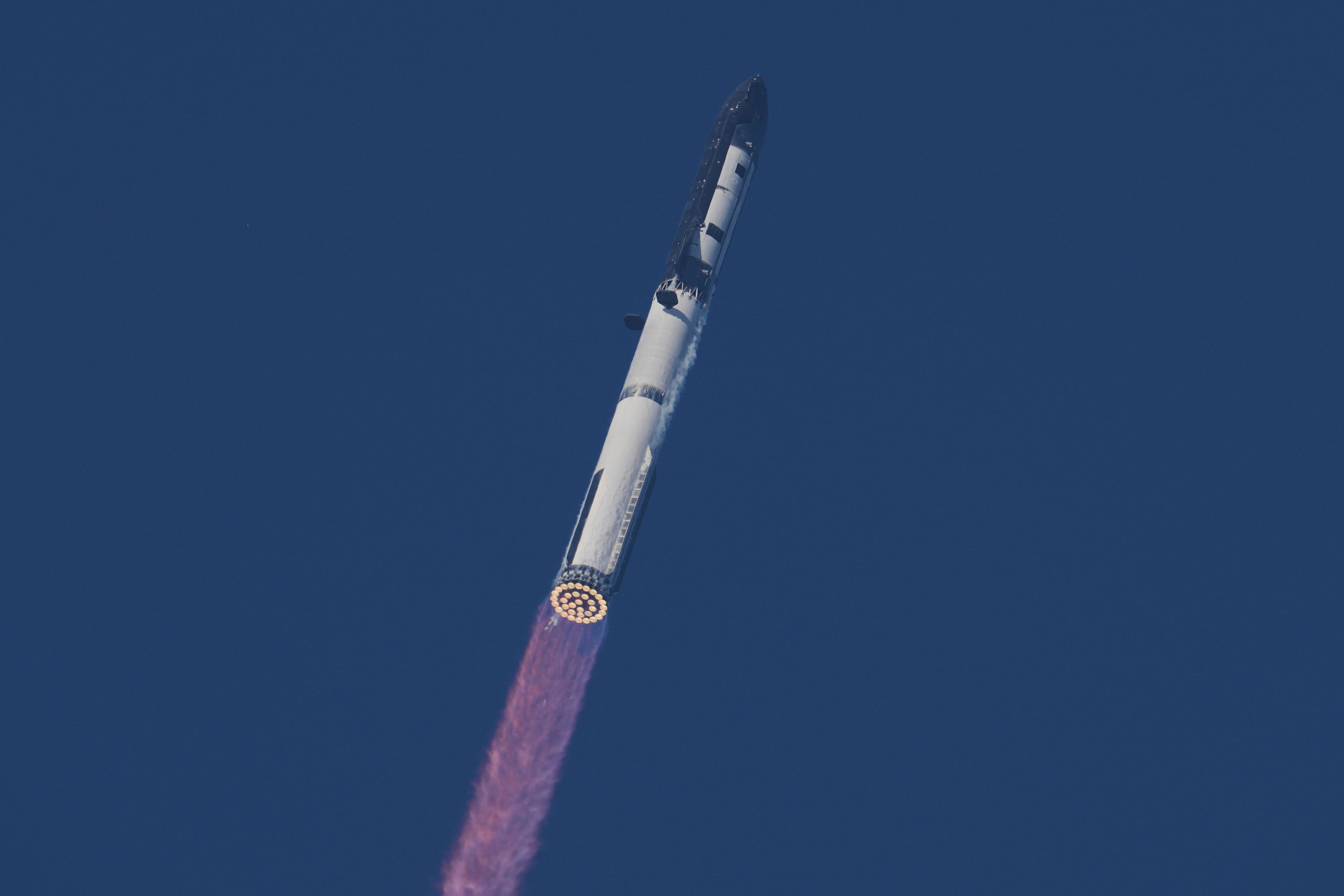
On Friday evening, SpaceX launched its revamped Starship V3 rocket, marking a significant milestone in the company's quest for lunar and interplanetary missions. This upgraded version is expected to play a crucial role in NASA's Artemis program, which aims to return astronauts to the moon by 2028. The launch took place at approximately 6:30 PM EDT from SpaceX's Starbase in Texas, following a previous day's launch attempt that was scrubbed due to a minor technical glitch, according to CBS News and Reuters.
The latest model stands at 407 feet tall and utilizes 33 Raptor engines, generating up to 18 million pounds of thrust, which is approximately double the capacity of NASA's SLS moon rocket. The launch involved the deployment of 20 mock Starlink satellites and was a crucial step toward operational capability, as stated by South China Morning Post and Los Angeles Times.
Despite some initial difficulties, including partial engine failures, the Starship successfully reached its designated altitude and executed critical maneuvers during its flight. After approximately one hour in space, the vehicle performed a controlled descent into the Indian Ocean, where it subsequently exploded as planned. SpaceX CEO Elon Musk described the launch as "an epic" accomplishment and celebrated it as a success for the broader ambitions of humanity, according to BBC and NPR.
NASA is closely monitoring these developments, emphasizing the importance of Starship for upcoming lunar landings and broader exploratory missions. The successful test flight is anticipated to bolster investor confidence as SpaceX approaches a potentially record-breaking initial public offering (IPO), expected to be the largest in Wall Street history. This launch further exemplified SpaceX's commitment to advancing reusability and reducing costs in space exploration, as highlighted by CBS News, Reuters, and South China Morning Post.


 October 09, 2026

 October 08, 2026

Stay informed effortlessly with PRESS AI WORLD, the AI-powered news summarizer that delivers concise, easy-to-read global headlines tailored to your interests.
 CBSNEWS
  REUTERS
  SCMP
SCMP  LATIMES
  BBC
BBC  NPR
NPR 


