
 Sam Striker


Notification about latest news from us.

 Published: Saturday, April 11
Updated: Saturday, April 11
Published: Saturday, April 11
Updated: Saturday, April 11
 6 months ago

Credited from: LEMONDE
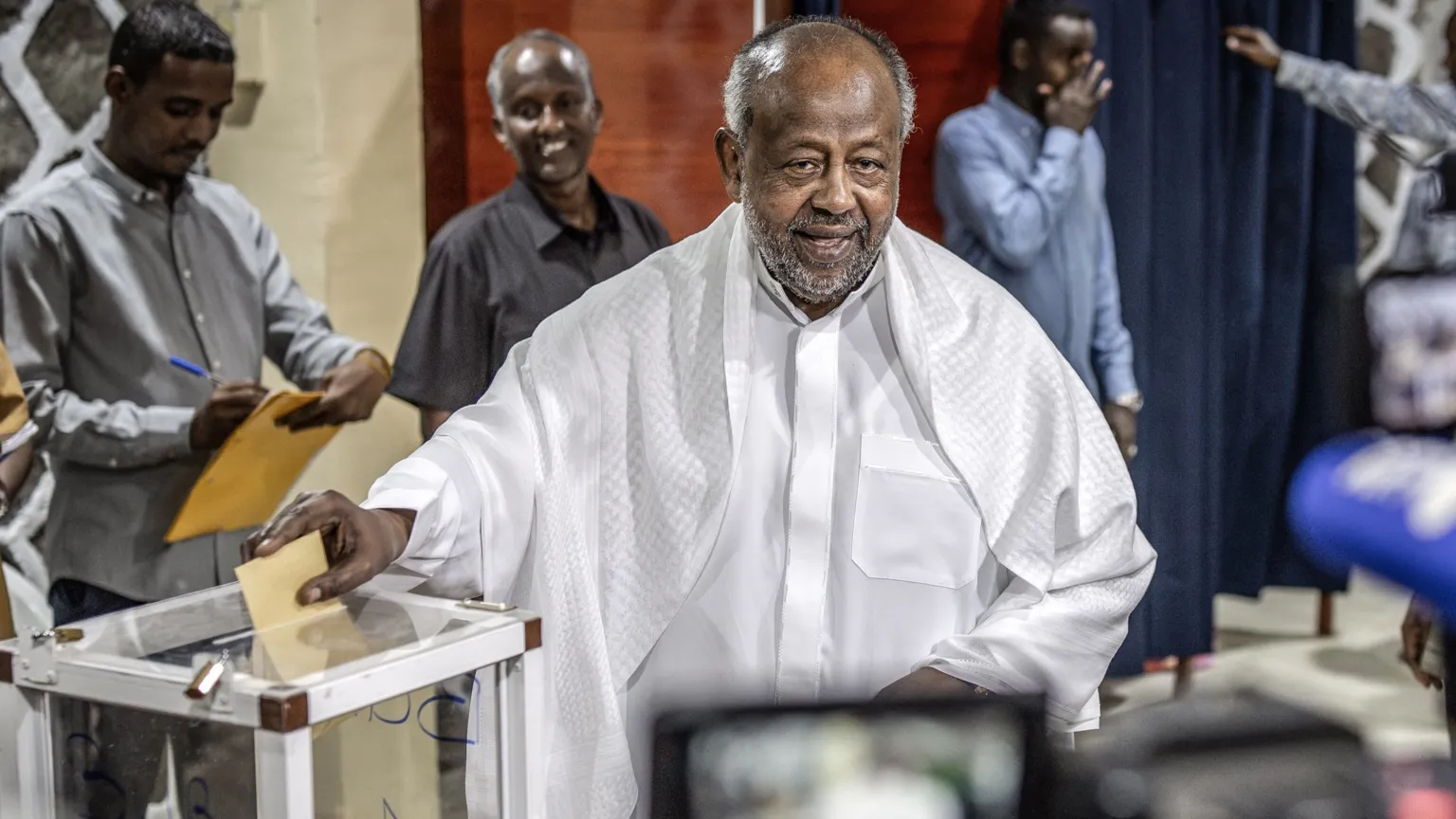
Djibouti's President Ismail Omar Guelleh claimed victory on April 11, 2026, in an election that has awarded him a sixth consecutive term. Official results indicate that Guelleh secured approximately 97.8% of the vote, while his opponent, Mohamed Farah Samatar, managed only 2.19%, as reported by Djibouti’s state-run news agency and confirmed by multiple sources including Africanews and BBC.
The election took place amid significant security measures, with just over 256,000 registered voters participating in what is viewed as a largely uncompetitive election. Turnout estimates varied, with some reports citing low participation at individual polling stations, while overall turnout claims suggested more than 80%. The disparity indicates a complex voter sentiment, with many Djiboutians expressing disinterest. "I'm not going to vote, it's pointless," a taxi driver shared, reflecting wider apathy towards the political process, according to Africanews and Le Monde.
Guelleh, who has ruled Djibouti since 1999, announced his intent to step down earlier, but subsequent changes to the constitution removed the mandatory age limit for presidential candidates. This political maneuvering has drawn criticism, as Guelleh's administration is viewed by some as repressive and heavily favoring his own majority Issa ethnic group over the Afar minority, claims supported by multiple human rights organizations. His administration also faces issues of great youth unemployment, with around 70% unemployment reported among young Djiboutians, providing a backdrop of significant economic challenges alongside his political dominance, according to Le Monde, Al Jazeera, and BBC.
In summary, fears of further centralization of power and suppression of political dissent lead many to question the legitimacy of Guelleh’s sweeping electoral win. The opposition has largely boycotted the electoral process since 2016, claiming that free political activity is stifled, a concern reiterated by various advocacy organizations covering Djibouti's political landscape, according to Africanews, Al Jazeera, and BBC.


 October 13, 2026
 October 11, 2026
 October 12, 2026
 October 08, 2026
Stay informed effortlessly with PRESS AI WORLD, the AI-powered news summarizer that delivers concise, easy-to-read global headlines tailored to your interests.

 AFRICANEWS
  LEMONDE
  ALJAZEERA
  BBC
BBC 


