
 Gloria Terra


Notification about latest news from us.


Credited from: SCMP
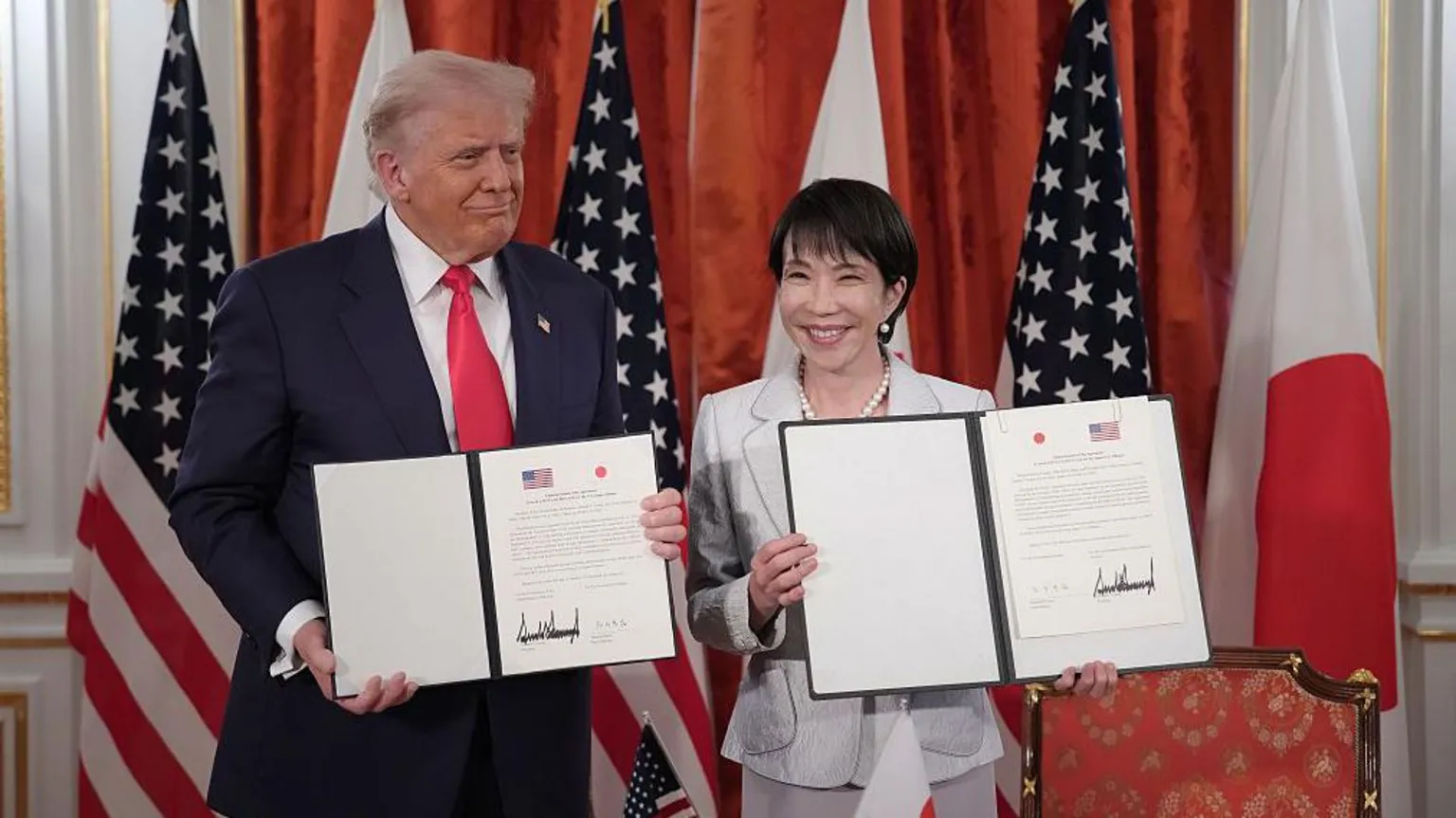
U.S. President Donald Trump arrived in Tokyo to meet Japan's first female Prime Minister, Sanae Takaichi, marking a significant step in cementing geopolitical and economic ties between the two nations. Trump expressed admiration for Takaichi's new role and stated, "We are an ally at the strongest level," highlighting the importance of U.S.-Japan relations as part of his Asia tour, which included previous stops in Malaysia and a forthcoming meeting with Chinese President Xi Jinping in South Korea, according to SCMP and ABC News.
During their meeting, Takaichi pledged to enhance defense spending and strengthen Japan's military capacity, a commitment that comes at a time of increasing regional tensions, particularly concerning China. Trump welcomed this approach and indicated further American support, but noted Japan's current defense spending does not meet U.S. expectations, as previously reported by Channel News Asia and Reuters.
The two leaders signed a significant agreement focused on critical minerals and rare earth supplies, aimed at reducing reliance on China for these crucial materials that support various technologies. Trump remarked on the need for such cooperation while lauding Takaichi as a promising leader following the tradition of her influential predecessor, Shinzo Abe, according to Al Jazeera and The Hill.
In a gesture of goodwill, Takaichi announced her intention to nominate Trump for the Nobel Peace Prize, recognizing his diplomatic efforts in the Asia-Pacific region. This nomination aims to bolster their newfound rapport amidst ongoing trade discussions, as Japan committed to a $550 billion investment in the United States—a figure that reflects the scale of cooperation agreed upon in their meetings, according to BBC and NPR.
At a post-meeting event onboard the USS George Washington, Trump reiterated the strong economic ties between the two nations, mentioning that Takaichi had previously discussed substantial investments, such as Toyota’s planned $10 billion commitment to U.S. facilities. Their cooperative spirit indicates a robust political alignment that seeks to balance national interests amid external pressures, including the U.S.'s trade dynamics with China, as articulated by Le Monde and CBS News.


 October 13, 2026


 October 13, 2026
Stay informed effortlessly with PRESS AI WORLD, the AI-powered news summarizer that delivers concise, easy-to-read global headlines tailored to your interests.

 Published: Tuesday, October 28
  11 months ago
 SCMP
SCMP  ABCNEWS
  REUTERS
  CBSNEWS
  CHANNELNEWSASIA
  THEHILL
  ALJAZEERA
  LEMONDE
  NPR
NPR  BBC
BBC 


