 Gloria Terra


Notification about latest news from us.

 Published: Wednesday, September 03
Updated: Wednesday, September 03
Published: Wednesday, September 03
Updated: Wednesday, September 03
 1 year ago

Credited from: BBC
China recently held a large-scale military parade in Beijing to commemorate the 80th anniversary of its victory over Japan in World War II. This event has not only highlighted the advances in the People’s Liberation Army (PLA) but also served as a demonstration of military power aimed at both domestic and international audiences. Notably, over 20 world leaders, including Russia's Vladimir Putin and North Korea's Kim Jong Un, attended the parade, signaling China’s intent to strengthen its influence globally, according to SCMP and BBC.
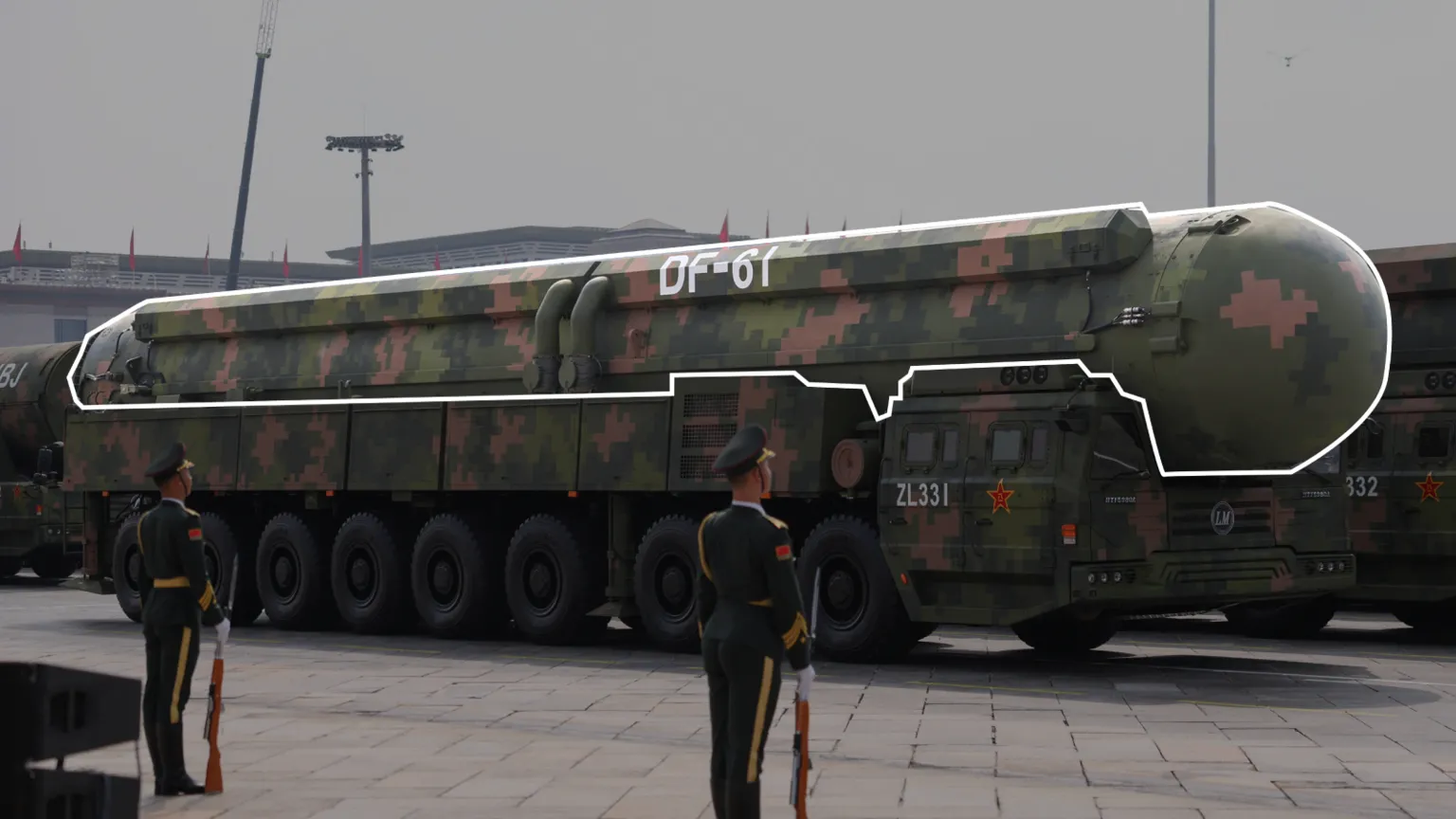
The event showcased an array of new military technologies, including long-range anti-ship missiles and intercontinental ballistic missiles (ICBMs) capable of striking targets far beyond China's shores. Some of the systems unveiled were reported as debut weapons, such as advanced anti-ship missiles and missile variants like the Dongfeng-61 and the “Guam Killer” Dongfeng-26D. However, analysts caution that the true functional capabilities of many systems remain unverified as they may not have undergone extensive combat testing, according to Business Insider and BBC.
Among the advanced technology displayed, China highlighted its focus on leveraging artificial intelligence (AI) across several military platforms. Noteworthy systems included drones designed for reconnaissance and attack missions, such as the GJ-11 stealth drone, and other AI-powered devices, dubbed "robotic wolves." This emphasis on AI reflects China's strategy to enhance command and control during operations, showcasing its willingness to integrate AI into critical military processes, according to SCMP and BBC.
The parade also included advanced laser weapon systems like the LY-1, a technology capable of disabling enemy electronics, as well as fifth-generation fighter jets. These displays illustrate China’s advancements in military technology and its commitment to enhance its deterrence capabilities amidst perceived threats from the United States and its allies. Analysts suggest that the production capabilities of China enable it to deploy a diverse range of weaponry quickly, although integrating these new systems into effective operational strategies may present challenges, according to Business Insider and BBC.
A major takeaway from the event was the clear message that China is seeking to project military power effectively beyond its shores, particularly in the Indo-Pacific region. This strategic ambition is evidenced by the showcase of a variety of missiles designed to counter US naval dominance. The development and promotion of missile technology have become central to China’s defense strategy, aimed at ensuring a credible second-strike capability to deter adversaries, especially the US Navy, according to SCMP, Business Insider, and BBC.
The recent military parade not only showcased China’s military advancements but also served a dual purpose as a sales platform for its arms. The presence of leaders from various countries indicates potential new markets for Chinese military exports. Countries like Myanmar, already known for their substantial purchases, may explore further opportunities to acquire advanced Chinese weaponry, emphasizing the geopolitical maneuvering alongside military exhibitions, as discussed in reports from SCMP, Business Insider, and BBC.


 October 15, 2026
 October 13, 2026

 October 13, 2026
Stay informed effortlessly with PRESS AI WORLD, the AI-powered news summarizer that delivers concise, easy-to-read global headlines tailored to your interests.

 SCMP
SCMP  BUSINESSINSIDER
  BBC
BBC 


