
 Atlas Winston


 Published: Sunday, March 09
Updated: Monday, March 10
Published: Sunday, March 09
Updated: Monday, March 10
 1 year ago

Credited from: CHANNELNEWSASIA
Key takeaways:
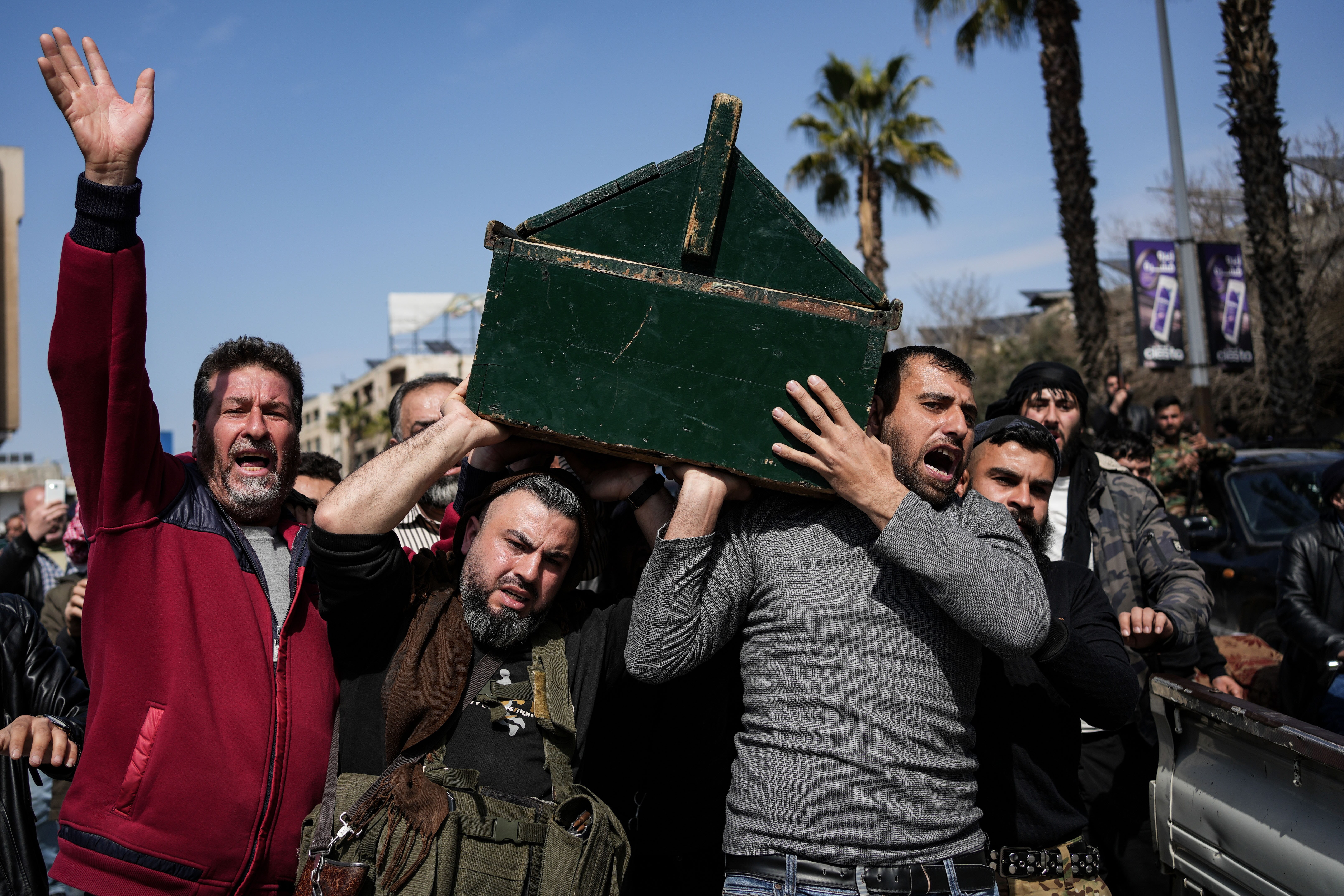
Intense fighting and retaliatory violence in Syria have led to the deaths of more than 1,300 individuals in a span of just 72 hours, highlighting the chaotic aftermath of the recent overthrow of former President Bashar al-Assad. The NPR reported that among the casualties are at least 830 civilians, according to the Syrian Observatory for Human Rights (SOHR), which monitors violence across the country. The Observatory's figures also noted that the casualties include 231 government security personnel and approximately 250 fighters loyal to the deposed regime.
The violence erupted on Thursday in the coastal provinces of Latakia and Tartus, both significant to the Alawite community from which Assad hails. Reports indicated that initial attacks involved Alawite gunmen ambushing government forces. In response, government troops have imposed curfews and responded with sweeping military operations aimed at reestablishing control over the affected areas, as detailed by Reuters.
Syria's interim president Ahmed al-Sharaa, leading the New Government, stated, “We must preserve national unity and civil peace as much as possible,” in a recent address from a mosque in Damascus, as the situation escalated into what has become a humanitarian crisis. Local residents reported a state of horror, with many fleeing their homes to seek safety from ongoing violence. According to South China Morning Post, calls for intervention to protect the vulnerable Alawite community have grown louder, especially amidst alarming reports of mass executions and forced displacements.
The SOHR described many of the killings as premeditated acts of revenge executed by various militia groups, further complicating the security landscape in the region. Despite the interim government’s pledge to protect minorities, the absence of a structured police force or military has left many feeling vulnerable. Historical divisions have resurfaced, underscored by significant fear of reprisal attacks against the Alawite sect, who have historically supported the Assad regime.
The global community watches closely as the violence potentially threatens to engulf more regions of Syria, with humanitarian leaders voicing strong concerns over the deteriorating situation and urging an end to hostilities. Societal tension between various factions highlights the struggle for stability in a nation that has faced years of devastating conflict.
Calls for peace from multiple sects in the region echo the urgent need for a sustainable resolution, as the situation rapidly evolves and continues to unfold.


 October 06, 2026
 October 06, 2026
 October 07, 2026
 October 09, 2026
Stay informed effortlessly with PRESS AI WORLD, the AI-powered news summarizer that delivers concise, easy-to-read global headlines tailored to your interests.


 BBC
BBC  REUTERS
  SCMP
SCMP  CHANNELNEWSASIA
  NPR
NPR 


